

Getting in touch with clients is not a problem for most companies these days, but the struggle is connecting with them: there’s a difference.
Even if you have high numbers of visitors, downloads, or purchases, it does not guarantee loyalty. Impersonal and inflexible experiences and companies unable to adapt to customers’ changing requirements can drive clients away. Custom mobile apps can make interactions more engaging and adaptive.
Why This Matters More Than Ever
Customer expectations have not only grown, but they have also shifted.
People now expect:
- Instant interactions
- Personalized experiences
- Seamless journeys across channels
Customers now compare your experience not only to your competitors, but also to the best apps they use daily. If your business relies solely on generic tools or unrelated platforms, you are already at a disadvantage.
The Real Challenges Businesses Are Facing
When collaborating with businesses, we frequently observe the following challenges:
1. Fragmented Customer Experience
Different systems for sales, support, and engagement that don’t communicate with each other. The outcome? Customers repeat themselves. Friction increases. Trust declines.
2. Limited Personalization
When data isn’t centralized, every interaction feels the same. These generic experiences don’t build customer loyalty.
3. Slow Adjustment
The solutions available off-the-shelf are often rigid. When your business evolves, your tools don’t keep up.
4. Low Engagement
Customers are unlikely to return if your app, or not having one at all, fails to offer genuine value.
Where Custom Mobile Apps Make the Difference
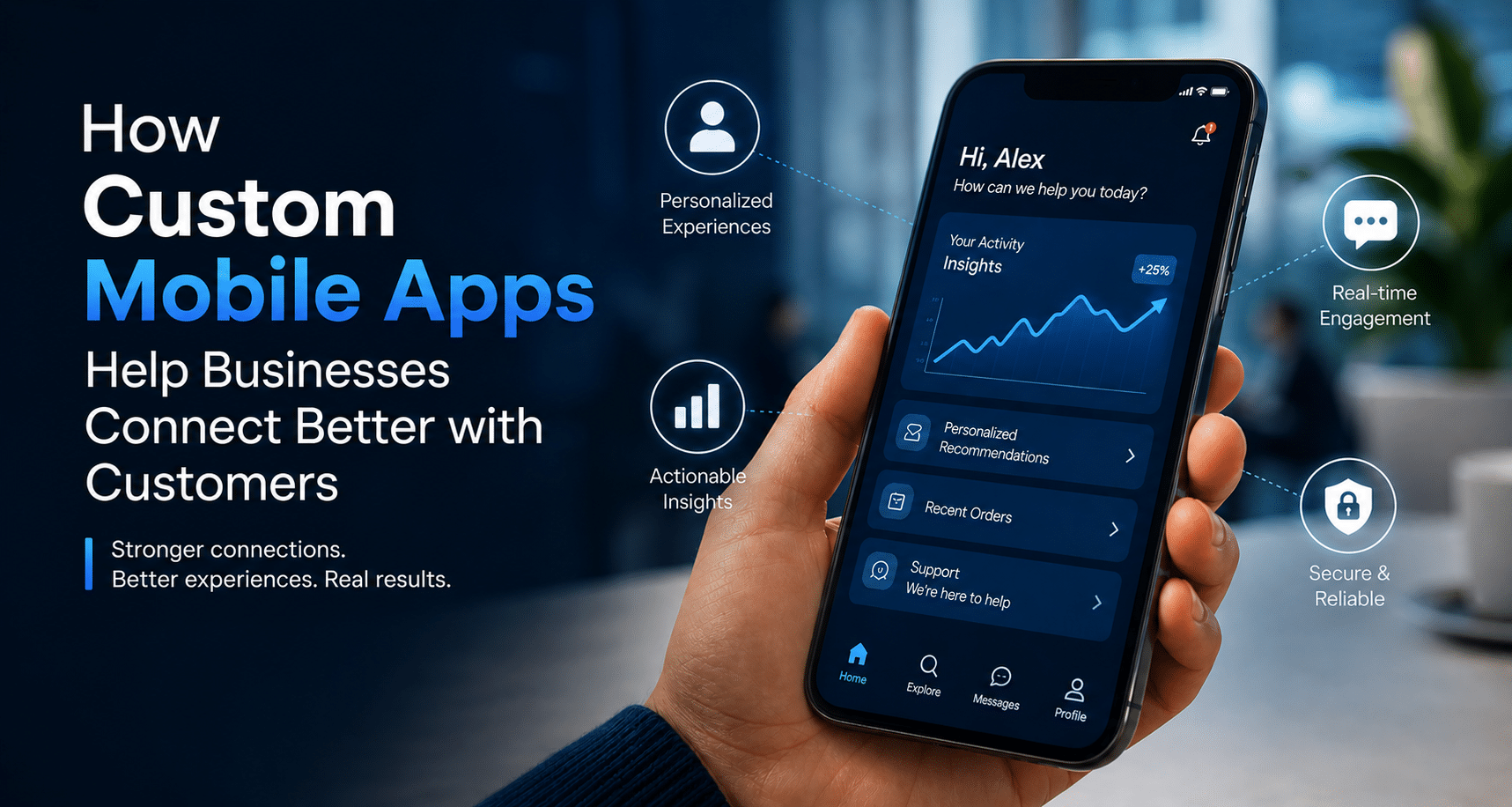
Having a presence on a customer’s phone is only one aspect of custom mobile apps. They focus on developing a meaningful, direct relationship with your clients.
Here’s how:
1. A Seamless, Unified Experience
Custom apps connect with your CRM, backend systems, and analytics to keep everything running smoothly. Customers may not see these systems, but they notice the difference in their experience.
2. Personalization That Actually Works
When the appropriate data is available in real time, you can:
- Recommend relevant products
- Send meaningful notifications
- Customize the experience for each individual
This is how engagement turns into loyalty.
3. Speed and Adaptability
Owning your product means you control its direction and future updates.
You can:
- Launch features faster
- Test ideas quickly
- Adjust based on real user behavior
It’s difficult to reach this level of flexibility with generic platforms.
4. Stronger Customer Relationships
A well-designed custom app can become a regular part of your customer’s daily life.
What This Looks Like in the Real World
We have seen companies unlock real value when they invest in custom mobile solutions:
- A service-based company reduced the number of support tickets by providing users with self-service options within the app.
- A retail brand increased repeat purchases through personalized offers, tailored promotions, and notifications.
- A travel company improved customer satisfaction by simplifying booking and providing real-time updates
These are not “nice-to-haves.” Revenue, customer retention, and how people see your brand are all directly affected.
Build vs. Buy: A Strategic Decision
Not every business needs a custom app right away. But as your company grows, things get more complex:
- More customers
- Additional data
- Higher expectations
That’s when the question shifts from “Can we use a standard solution?” to “Is this approach limiting our ability to grow?”
Custom mobile apps become a strategic investment when:
- Customer experience is a differentiator
- Speed and adaptability matter
- Data needs to be unified and actionable
Final Thought
Technology alone does not create a real connection. However, the appropriate product, purposefully created, centered around your clients, and compatible with your company, is what creates that bond. Custom mobile apps give you the opportunity to transition from transactions to relationships. And that’s what really makes companies stand out in today’s market.
If you want to improve your customer experience or make your systems work together more effectively, it’s worth exploring these ideas. Real connection happens by design, not by accident.
Frequently Asked Questions
1. Do all businesses need a custom mobile app?
Not necessarily. When scalability, personalization, and user experience are essential to business expansion, a custom mobile app makes the most sense. If your current tools are limiting how you engage with customers, it’s worth evaluating.
2. How is a custom mobile app different from off-the-shelf solutions?
Off-the-shelf solutions are intended for general use. On the other side, custom mobile apps are built around your unique company model, customer experience, and processes, providing greater flexibility, improved integration, and a stronger competitive edge.
3. What are the main benefits of investing in a custom mobile app?
The most significant benefits include improved customer engagement, tailored experiences, increased data visibility, and the capacity to adapt quickly as your business evolves.
4. How long does it typically take to build a custom mobile app?
It depends on the complexity, but most projects start delivering value within a few months through phased releases. The goal is not just to build fast but to build the right product.
5. How do I know if my business is ready for a custom app?
Strong indicators that your generic solutions are no longer suitable for your company include disconnected systems, low customer engagement, or limited flexibility with your current tools. It usually means your business has outgrown generic solutions.
🔗 Explore More Insights
If this topic resonated with you, there’s more where this came from. We regularly share practical insights, real-world challenges, and strategies to help businesses build better products and scale smarter.
If you’re looking to go deeper, I invite you to explore more of our insights: Read Latest News About Software Innovations


