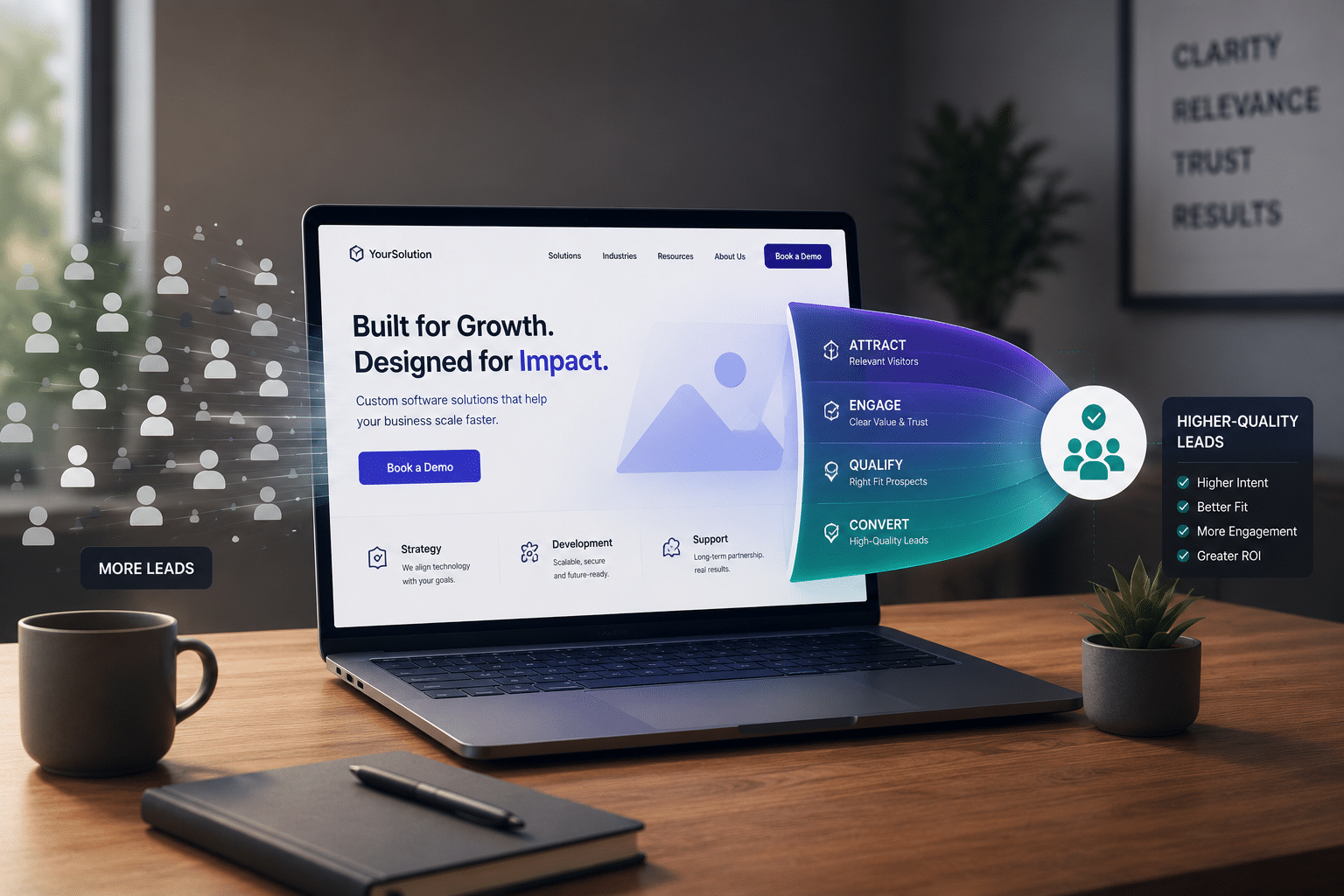



Scalable websites should support business growth, not hold it back. Yet, many organizations find that their sites do just that. Traffic increases, organizations add new features, and customer expectations evolve. Suddenly, a once-simple website becomes expensive to scale, difficult to maintain, and slow to update. The problem usually isn’t the business. It’s the technology foundation.
Building digital experiences that continue to function as your company expands, not just on launch day, but for years to come, is the goal of scalable web development.
Why Scalability Matters More Than Ever
Today’s websites do much more than present information.
They power:
- Customer acquisition
- E-commerce
- Self-service portals
- SaaS platforms
- Marketing campaigns
- Digital experiences
- Business operations
At the same time, organizations expect websites to:
- Load instantly
- Scale globally
- Support multiple devices
- Integrate with business systems
- Adapt quickly to market changes
Meeting these expectations requires more than attractive design.
You need a scalable architecture to keep up.
What Makes a Website Scalable?
A scalable website means a website can grow without losing performance, security, or ease of maintenance.
That includes the ability to support:
- More users
- More content
- More integrations
- More traffic
- More functionality
- More business requirements
Scalability is relevant for both technology and business success.
Common Challenges Organizations Face
Many businesses run into the same problems as they expand.
| Challenge | Business Impact |
|---|---|
| Slow page performance | Lower user engagement |
| Outdated technology stack | Higher maintenance costs |
| Difficult content updates | Slower marketing execution |
| Limited integrations | Operational inefficiencies |
| Poor mobile performance | Lost conversions |
| Monolithic architecture | Reduced agility |
| Security vulnerabilities | Increased business risk |
Most of these problems originate from architectural decisions made early in the project.
Building Scalable Websites with Future-Ready Technologies
Modern web development is no longer about choosing a single framework.
It’s about building a system that helps your business grow over time.
1. Modern Front-End Frameworks
Technologies such as:
- React
- Next.js
- Vue
- Angular
These tools help create faster websites, reusable parts, and easier maintenance. Modern interfaces improve both user experience and developer productivity.
2. API-First Architecture
Today’s scalable websites rarely operate in isolation.
They connect with:
- CRM platforms
- Payment gateways
- ERP systems
- Marketing automation
- Analytics platforms
- Customer portals
An API-first approach makes it easier to add new integrations and adapt as needs change.
3. Cloud-Native Infrastructure
Cloud platforms allow websites to scale dynamically based on demand.
Benefits include:
- Higher availability
- Faster deployment
- Better disaster recovery
- Improved reliability
With the right setup, your infrastructure helps your business grow instead of holding it back.
4. Performance Optimization
Website performance directly impacts business outcomes.
Modern optimization strategies include:
- Image optimization
- Lazy loading
- CDN distribution
- Code splitting
- Caching
- Core Web Vitals optimization
Performance is no longer just a technical metric.
It has a direct impact on user satisfaction, SEO, and conversions.
5. Flexible Content Management
Modern organizations need content teams to move quickly.
Headless CMS platforms allow developers and marketers to work independently while maintaining a consistent user experience across multiple channels.
This approach lets teams move faster without losing control.
Future-Ready Website Checklist
| Area | Best Practice |
| Architecture | Modular and API-first |
| Performance | Optimize Core Web Vitals |
| Security | Continuous updates and monitoring |
| Mobile Experience | Responsive by default |
| Scalability | Cloud-native infrastructure |
| Content | Flexible CMS strategy |
| SEO | Structured, semantic content |
| Accessibility | Inclusive design principles |
Real-World Perspective: What the Data Says
Performance has a measurable impact on business outcomes.
According to Google Research, as page load time increases, the probability of users leaving a website rises significantly. Faster websites consistently deliver better engagement and conversion performance.
Additionally, Google Search Central emphasizes that technical quality, including structured content, mobile usability, page experience, and semantic HTML, helps search engines better understand and surface content.
This becomes even more important as AI-powered search engines increasingly prioritize content that is:
- Well-structured
- Fast to load
- Easy to interpret
- Rich in context
- Built around clear entities
The takeaway is clear:
Scalable architecture isn’t only about supporting future traffic.
It’s about building digital experiences that work well for users, search engines, and AI systems.
Practical Recommendations for Business Leaders
If you’re planning a new website or updating your current one, keep these principles in mind:
1. Design for growth, not just launch.
Build with future requirements in mind.
2. Invest in architecture early.
A strong foundation helps you avoid technical debt later on.
3. Prioritize performance.
Fast websites improve user experience and business outcomes.
4. Build for integration.
Your website should work smoothly with your other business tools and systems.
5. Think beyond today’s technology.
Choose platforms that can grow and change as your organization does.
Final Thought
Technology changes quickly. Business goals change even faster. The scalable websites that continue delivering value over time are rarely the ones built with the newest framework alone. They’re the ones built with scalability, flexibility, performance, and long-term strategy from day one.
Future-ready web development doesn’t try to predict tomorrow; it prepares you for it.
Frequently Asked Questions
What makes a website scalable?
A scalable website can handle increasing traffic, content, integrations, and business requirements while maintaining performance, security, and reliability.
Why are future-ready web technologies important?
They allow businesses to adapt more easily to changing customer expectations, new technologies, and business growth without requiring complete rebuilds.
How does website performance affect business results?
Faster websites improve user experience, search visibility, customer engagement, and conversion rates while reducing abandonment.
What is an API-first architecture?
An API-first architecture enables websites to integrate seamlessly with external systems such as CRMs, payment platforms, analytics tools, and enterprise applications.
How can businesses prepare their websites for AI-powered search?
By creating fast, well-structured, semantically organized content that clearly communicates topics, entities, and expertise while following accessibility and technical best practices.
About the Author
Jose Pardo is a Product & Program Manager at Zunzun Solutions, where he helps organizations bridge business goals with technology execution through strategic product leadership, scalable delivery models, and high-performing distributed teams.
With over 15 years of experience leading cross-functional initiatives across product management, release management, and global software delivery, his work combines operational excellence with practical business thinking.
Connect on LinkedIn:
Jose Pardo | LinkedIn
If you found this topic helpful, you are welcome to get in touch and keep the conversation going.